French Restoration Rug & Tapestry Paris | Antique Textiles
Specialized Cleaning Repair and Reconstruction| French Tapestry & Rug
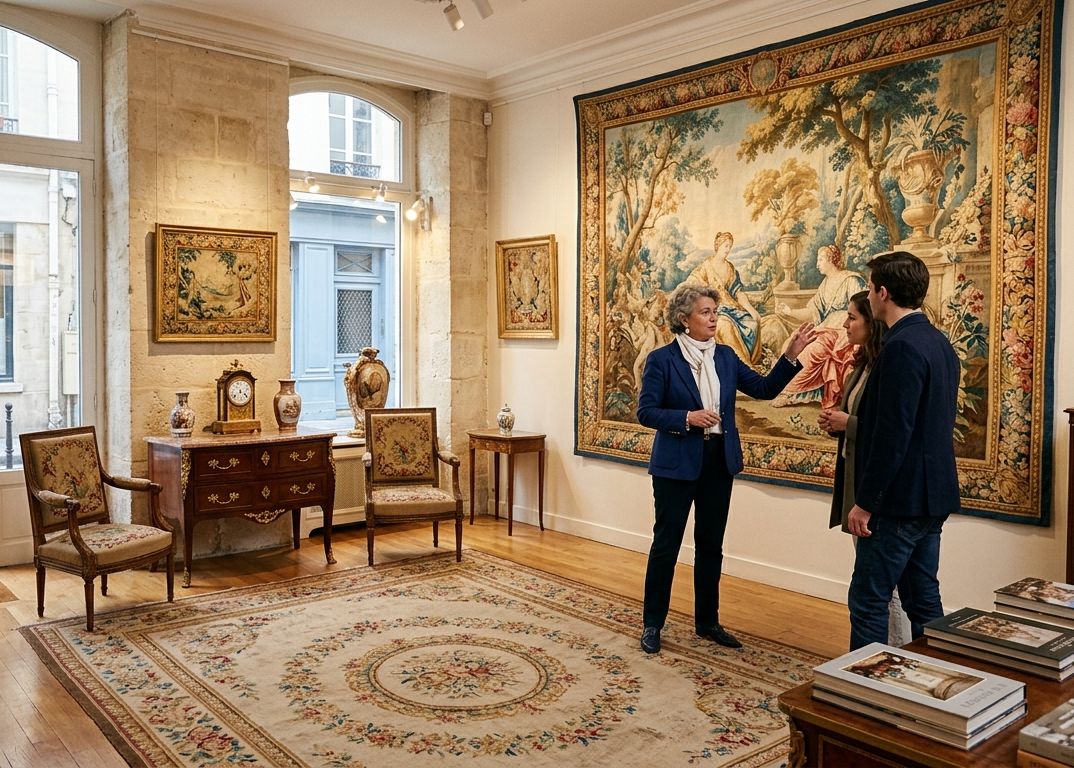
Why Restore Antique Rugs and Tapestries at Paris ?
French Restoration Rugs & Tapestries Paris | Antique Textiles
Expertise in Rug and Tapestry Restoration in Paris
Paris is widely recognized as one of the world’s leading centers for the conservation and restoration of antique textiles. Oriental rugs, European tapestries, and rare decorative pieces are treated with exceptional precision and care. Restoring an antique rug is not simply about improving its appearance—it is about preserving a work of art rich in history, culture, and craftsmanship.
In this highly specialized field, Galerie Lissier stands out as a trusted reference. Combining deep knowledge of traditional techniques with a rigorous and tailored approach, the gallery supports collectors, interior designers, and institutions in maintaining and restoring valuable textile pieces.
Why Restore Antique Rugs and Textiles?
Preserving Textile Heritage
Antique rugs and tapestries are far more than decorative objects. They represent a unique cultural heritage, often passed down through generations. Over time, exposure to light, humidity, wear, and environmental factors can damage these delicate pieces. Professional restoration helps slow deterioration while maintaining the authenticity of the textile.
A well-executed restoration can also significantly enhance the value of an antique rug. For collectors and art enthusiasts, it is a long-term investment that protects both the aesthetic and historical integrity of the piece.
A Technical and Artistic Discipline
Textile restoration requires rare and highly specialized skills. Each intervention demands in-depth knowledge of natural fibers such as wool, silk, and cotton, as well as regional weaving techniques. Experts must be able to recreate intricate patterns, match original colors, and work by hand with exceptional precision.
In Paris, this expertise is particularly refined, especially in specialized institutions such as Galerie Lissier, where every textile is handled with a bespoke approach.
Key Steps in High-Quality Textile Restoration
Detailed Assessment and Diagnosis
The restoration process begins with a thorough examination of the rug or tapestry. This step identifies structural weaknesses, tears, material loss, discoloration, or previous repairs. A precise diagnosis is essential to determine the most appropriate restoration strategy.
Specialized Cleaning
Cleaning is a delicate but essential stage. It involves removing dust, stains, and accumulated residues without damaging the natural dyes or fibers. Gentle, controlled techniques are used to preserve the original vibrancy of the textile.
Repair and Reconstruction
Damaged areas are carefully restored by hand using threads that match the original material, texture, and color. This meticulous work ensures that repairs blend seamlessly into the overall design, maintaining the visual harmony of the piece.
Finishing and Long-Term Conservation
After restoration, the textile is stabilized to prevent further deterioration. Experts also provide guidance on proper care, including recommendations regarding light exposure, humidity control, and regular maintenance.
Paris: A Global Hub for Antique Textiles
Paris has long been associated with excellence in the field of antique textiles. The city attracts an international clientele seeking high-end restoration services for rugs and tapestries. Parisian workshops are known for their ability to combine traditional craftsmanship with modern conservation techniques.
This concentration of expertise makes Paris an essential destination for collectors and enthusiasts of antique textiles, whether for acquisition, appraisal, or restoration. Specialized galleries play a crucial role in preserving and passing on this exceptional knowledge.