Orangerie chateau Versailles : Tapisserie
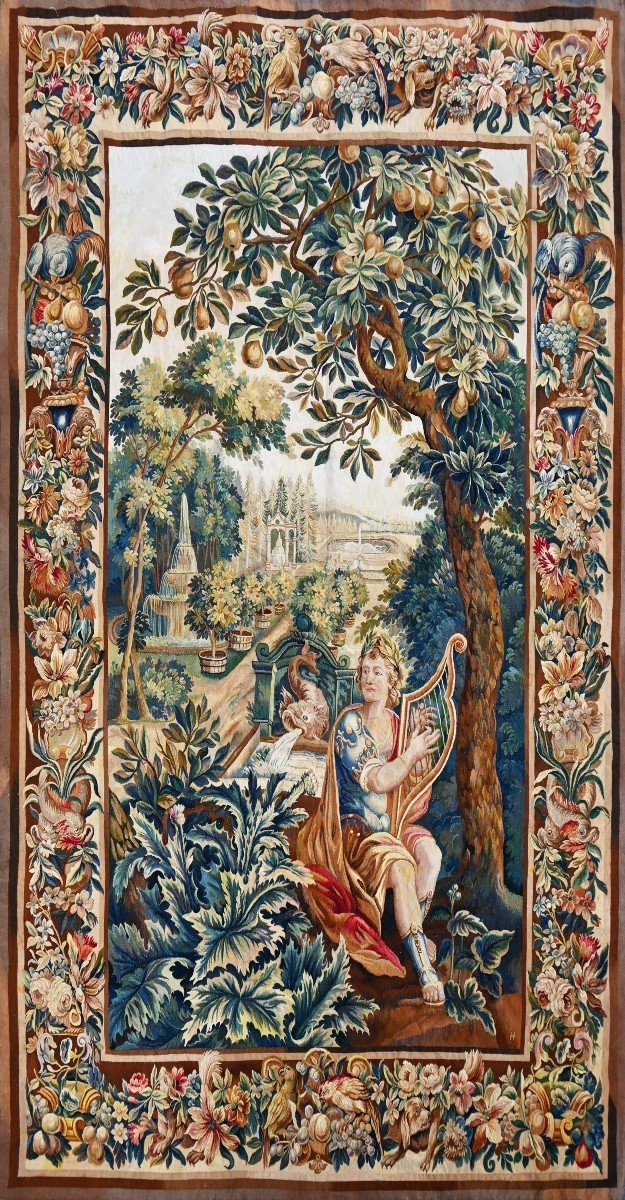
Tapisserie : Apollon à l'Orangerie de Versailles
Tapisserie "Apollon à l'Orangerie de Versailles" - Manufacture Bruxelles 18e Siècle - N° 1480
Artiste : Manufacture Des Bruxelles
"Apollon aux Jardins : Allégorie du Roi-Soleil devant l’Orangerie de Versailles"
Tapisserie de style Louis XIV, Manufacture des Bruxelles XVIIIe siècle
Cette magnifique tapisserie ayant bénéficié d'un nettoyage en profondeur aussi d'un doublage à la main en tissu 100% lin, et à une vérification minutieuse par nos experts dans notre Atelier artisanal. Il est désormais prête à orner votre intérieur
- Period: 18th century
- Style: Louis 16th, Directory
- Condition: Perfect condition
- Material: Wool
- Width: 175 cm
- Height: 280 cm
- Depth: 1 cm
La Fusion du Mythe et du Pouvoir
Cette œuvre est une célébration éclatante de l’idéologie de Louis XIV. Le personnage central est Apollon, dieu grec de la lumière, des arts et de l’harmonie. À l'époque, le Roi-Soleil s'identifiait directement à cette divinité pour affirmer son rôle de protecteur des arts et d'ordonnateur du monde.
Le dieu est ici représenté non pas sur l'Olympe, mais dans un décor terrestre immédiatement reconnaissable par les contemporains : les jardins de Versailles. Cette mise en scène signifie que le domaine royal est le nouveau séjour des dieux.
Analyse des Détails et Symboles
La Figure d'Apollon : Assis dans une posture noble, il joue de la lyre-harpe, instrument symbolisant l'ordre et l'harmonie qu'il fait régner sur le royaume. Il porte une cuirasse romaine richement travaillée et un manteau de parade drapé, mêlant l'image du dieu à celle du chef de guerre victorieux.
L’Orangerie de Versailles : En arrière-plan, à gauche, on distingue les célèbres orangers en bacs, une innovation de l'époque qui faisait la fierté de Louis XIV. On aperçoit également l'architecture classique des jardins, avec ses perspectives et ses fontaines à plusieurs niveaux.
La Fontaine au Dauphin : Juste derrière Apollon, une fontaine ornée d'un dauphin crachant de l'eau est visible. Le dauphin est un symbole royal fort en France (le fils aîné du roi), mais aussi un attribut d'Apollon dans la mythologie (le dieu Delphien).
La Bordure "Aux Mille Fleurs" : Le cadre de la tapisserie est une prouesse technique. Cette riche bordure de guirlandes, de fruits (poires, raisins) et d'oiseaux exotiques (perroquets, faisans) symbolise l'abondance et la prospérité du royaume sous le règne du monarque.
La Nature Maîtrisée : On note au premier plan de grandes feuilles d'acanthe et une végétation luxuriante, mais parfaitement ordonnée, illustrant le concept du jardin à la française où l'homme (et le Roi) dompte la nature sauvage.
Le style des visages et la finesse des dégradés suggèrent un carton (modèle) inspiré des travaux de Charles Le Brun ou de Jean Cotelle, les peintres qui ont le mieux immortalisé les bosquets de Versailles pour la Manufacture des Gobelins.
EN :
Tapestry "apollo In The Orangery Of Versailles" - Brussels Manufacture, 18th Century - No. 1480
Artist: Manufacture Des Bruxelles
"Apollo in the Gardens: Allegory of the Sun King before the Orangerie at Versailles"
Louis XIV style tapestry, Brussels Manufactory (18th century)
Historical and Iconographic Description
The Subject: The Fusion of Myth and Power
This work is a vibrant celebration of Louis XIV's ideology. The central figure is Apollo, the Greek god of light, the arts, and harmony. At the time, the Sun King directly identified with this deity to assert his role as protector of the arts and order-maker of the world.
The god is depicted here not on Mount Olympus, but in an earthly setting immediately recognizable to contemporaries: the gardens of Versailles. This staging signifies that the royal domain is the new abode of the gods.
Analysis of Details and Symbols
The Figure of Apollo: Seated in a noble pose, he plays the lyre-harp, an instrument symbolizing the order and harmony he brings to the kingdom. He wears a richly decorated Roman cuirass and a draped ceremonial cloak, blending the image of the god with that of the victorious war leader.
The Versailles Orangery: In the background, to the left, one can see the famous orange trees in tubs, an innovation of the time that was the pride of Louis XIV. The classical architecture of the gardens, with its vistas and multi-tiered fountains, is also visible.
The Dolphin Fountain: Just behind Apollo, a fountain adorned with a dolphin spouting water can be seen. The dolphin is a powerful royal symbol in France (representing the king's eldest son), but also an attribute of Apollo in mythology (the Delphic god).
The "A Thousand Flowers" Border: The tapestry's frame is a technical marvel. This rich border of garlands, fruits (pears, grapes), and exotic birds (parrots, pheasants) symbolizes the abundance and prosperity of the kingdom under the monarch's reign.
Nature Tamed: In the foreground, large acanthus leaves and lush, yet perfectly ordered, vegetation illustrate the concept of the French formal garden, where man (and the King) tames wild nature.