FRENCH ANTIQUE TAPESTRY
French Tapestry | Aubusson, Gobelin, Flemish
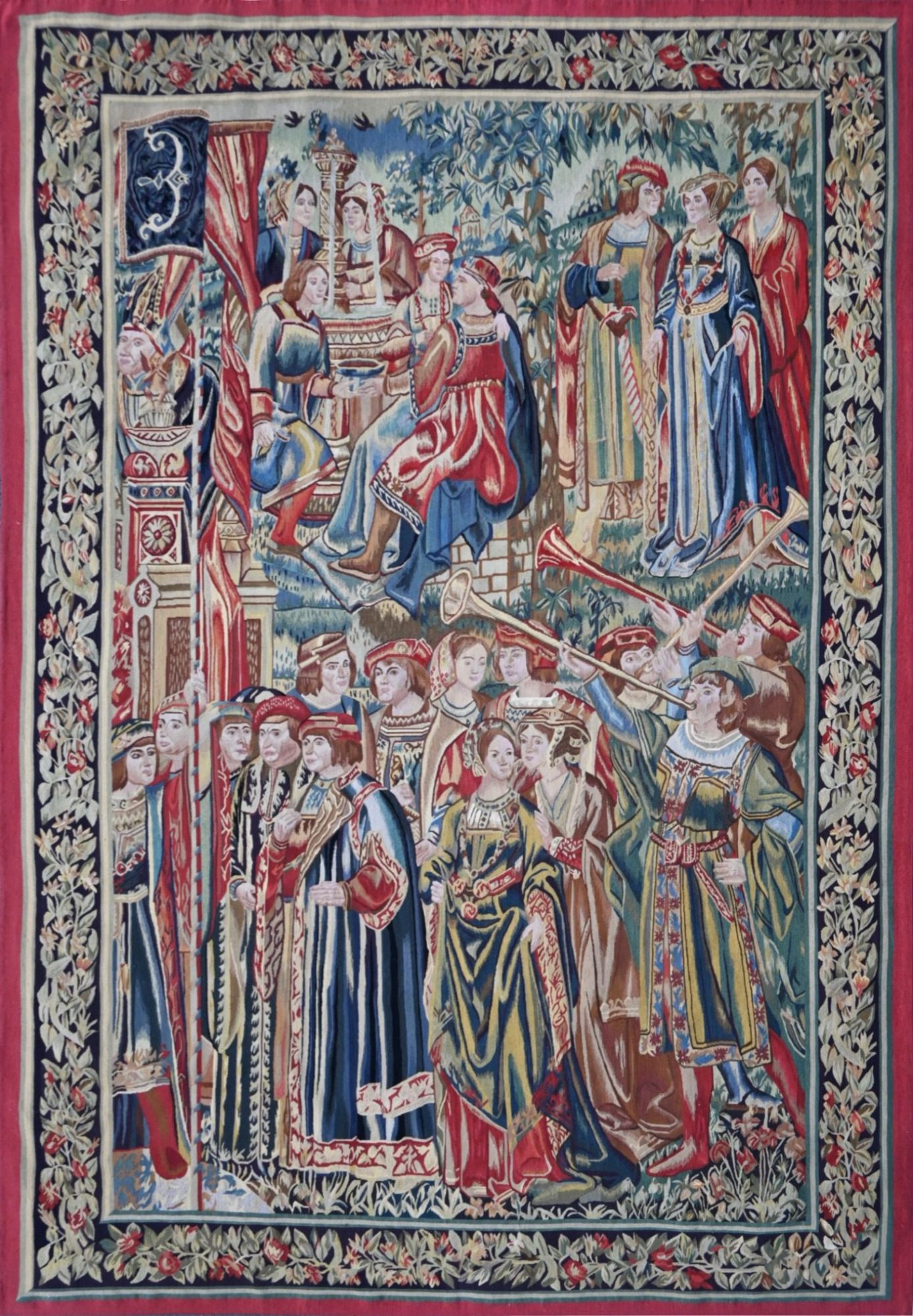
French antique tapestry represents one of the most remarkable achievements in European decorative arts, reflecting both extraordinary craftsmanship and the cultural richness of France from the Middle Ages through the eighteenth century. Far more than simple decoration, these textiles were powerful symbols of prestige, wealth, and intellectual refinement. They adorned the walls of castles, palaces, and noble residences, while also serving a practical function by insulating large stone rooms from cold.
The origins of French tapestry can be traced back to the fourteenth century, when large narrative works began to flourish. These early tapestries often depicted biblical stories, mythological scenes, and episodes from chivalric romances. Each piece was meticulously woven by hand using wool and silk threads, sometimes enhanced with gold or silver. The process was incredibly time-consuming, requiring months or even years of labor from highly skilled artisans known as weavers. Their expertise allowed them to translate painted designs, called cartoons, into intricate woven images.
As time progressed, tapestry production became closely linked to royal patronage. By the seventeenth century, under the influence of the monarchy, tapestry workshops were organized into major institutions. These royal manufactories played a crucial role in defining artistic standards and promoting a distinct French style. Tapestries became instruments of political expression, often portraying royal achievements, military victories, and allegorical representations of power. They were designed by prominent artists, which elevated tapestry from craft to high art.
Stylistically, French tapestries evolved significantly over the centuries. Medieval works are often characterized by flat compositions, decorative backgrounds, and symbolic imagery. During the Renaissance, there was a shift toward greater realism, perspective, and attention to detail. By the eighteenth century, lighter themes became popular, including pastoral scenes, romantic encounters, and idyllic landscapes. The color palette softened, and compositions became more fluid and elegant, reflecting the tastes of aristocratic society at the time.
Today, the preservation of antique French tapestries presents significant challenges. These textiles are highly sensitive to environmental factors such as light, humidity, and temperature fluctuations. Museums and collectors must carefully control display conditions to prevent deterioration. Conservation efforts often involve delicate restoration techniques aimed at stabilizing the fabric without altering its original character.
Beyond their aesthetic appeal, French antique tapestries serve as valuable historical documents. They provide insight into the social, political, and cultural contexts in which they were created. Through their imagery and craftsmanship, they reveal details about fashion, architecture, and daily life in past centuries. Each tapestry tells a story, not only through its subject matter but also through the methods and traditions behind its creation.
Even today, French antique tapestries continue to captivate historians, collectors, and art enthusiasts. They stand as enduring symbols of artistic excellence and cultural heritage, embodying a unique blend of technical mastery and creative expression that has defined French decorative arts for centuries.